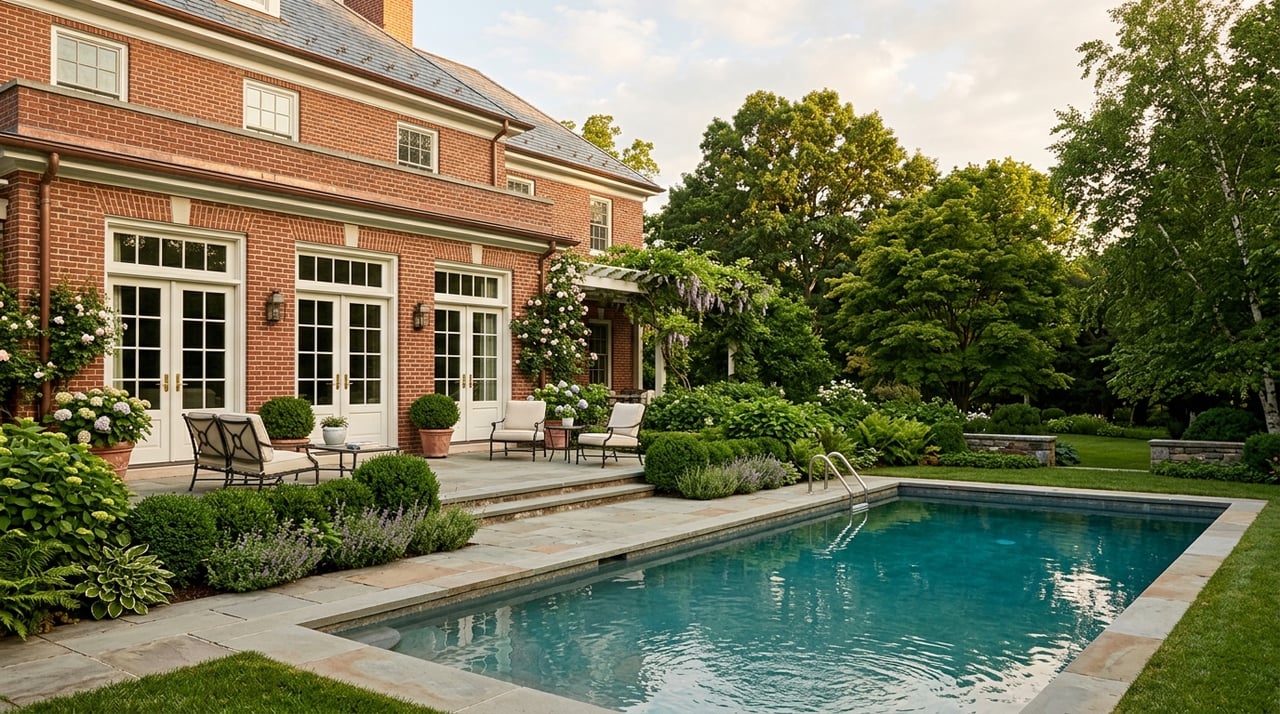
If you are choosing between a new build and a classic estate in Frontenac or Town and Country, you are not just comparing finishes and floor plans. You are weighing setting, long-term upkeep, design review, and how well a home fits the land around it. In these two St. Louis County markets, that context matters in a very real way, and understanding it can help you buy with more confidence. Let’s dive in.
Why this choice feels different here
In many markets, the decision between new construction and an older home comes down to style and maintenance. In Frontenac and Town and Country, the lot, landscape, and relationship to surrounding homes carry just as much weight as the house itself.
Frontenac’s planning documents describe a community of large stately homes on quiet streets in a rolling, wooded setting. The city’s land use is more than 90 percent residential, and its housing stock continues to evolve through rehabs, additions, and replacement of older homes. That means buyers often encounter both updated estates and newly built homes, sometimes on the same street.
Town and Country presents a similar pattern, but with a strong emphasis on green space and large-lot residential character. The city’s planning direction has long supported one-acre lots as the primary residential pattern, and residents have said they value green space and the balance between residential and commercial property. If you are shopping here, the site itself is often part of the value story.
Frontenac and Town & Country by the numbers
The local housing context helps explain why these choices can feel high-stakes.
Frontenac had about 3,583 residents, roughly 1,213 households, a 2022 median family income of $174,678, and a 2022 median house value of $758,200. The city also notes a housing base that includes single-family villas and townhouses, alongside its larger detached homes.
Town and Country had an estimated 11,625 residents in 2024, about 4,056 households, an 88.0 percent owner-occupied rate, a median household income of $237,083, and a median owner-occupied home value of $895,000. In practical terms, both cities sit in a segment where buyers tend to look beyond surface-level finishes and think carefully about lasting value.
What a new build offers
A new build can be very appealing if you want a home that feels turnkey from day one. In these markets, that often means current floor plans, newer materials, and mechanical systems that should need less immediate attention.
Another major advantage is energy performance. ENERGY STAR states that certified homes are at least 10 percent more energy efficient than code-built homes and average about a 20 percent improvement. For buyers focused on utility use, comfort, and fewer near-term upgrades, that can be a meaningful benefit.
Newer homes can also reduce the number of major projects you are likely to face in the first few years. Roofs, windows, insulation, HVAC equipment, and air sealing are usually more current than what you may find in an older estate. If your schedule is full and you want to avoid a renovation cycle, that matters.
New construction still has local limits
A new home in Frontenac or Town and Country is not a blank check for any design choice. Both cities have review processes that affect how homes are built and changed.
Town and Country requires all new residences and front-of-house additions to go before the Architectural Review Board before permitting. The city also requires site plan review for planned residential communities and other large-scale development.
Frontenac’s Architectural Review Board reviews building permits that affect exterior architectural features, and the board will not vote without full construction plans. Frontenac’s planning framework also emphasizes high-quality architecture and design that fits the landscape and existing physical character.
That means the best new builds in these areas are usually the ones that feel grounded in their setting. A house that responds well to the lot, tree canopy, and surrounding scale will typically make more sense here than one that ignores them.
What a classic estate offers
A classic estate often delivers something that is difficult to reproduce overnight: a settled site. Mature trees, established landscaping, long setbacks, and a sense of privacy can shape the experience of a property just as much as the rooms inside.
In both Frontenac and Town and Country, that setting aligns with the local planning story. Frontenac describes a wooded landscape and stately homes, while Town and Country emphasizes large-lot residential character and green space. For many buyers, that combination is the reason to choose an older estate in the first place.
A well-kept estate can also offer architectural depth and a stronger sense of permanence. If you value craftsmanship, traditional materials, and a home that feels rooted in place, an older property may provide a kind of character that new construction tries to emulate but cannot always match.
Renovation can add value thoughtfully
Frontenac’s planning documents recognize rehabs, additions, and incremental replacement of outdated homes as part of the city’s ongoing evolution. That is important because it shows there is room for change, but with an expectation that the result should respect the site and surrounding character.
A classic estate with strong bones and a thoughtful renovation can line up well with that goal. Updated systems, improved insulation, and carefully planned exterior work can give you the comfort of a more current home while preserving what made the property appealing in the first place.
For buyers who enjoy stewardship as much as ownership, that can be the sweet spot. You may not be chasing brand-new finishes alone. You may be preserving a setting and improving it with intention.
The renovation realities to budget for
Older homes usually bring more variables, especially if you plan to renovate soon after closing. That does not make them a poor choice, but it does make due diligence more important.
The Department of Energy notes that many older homes have less insulation than homes built today. It recommends checking insulation in both old and new parts of the house and scheduling professional furnace or heat-pump maintenance each year.
If the home was built before 1978, lead-based paint becomes another key issue. The EPA says homes built before 1978 are more likely to contain lead-based paint, and renovation, repair, and painting work in those homes can create significant lead dust.
For a classic estate, your checklist may include:
- Insulation levels
- Air sealing
- Window condition and performance
- HVAC age and maintenance history
- Electrical or plumbing updates
- Lead-safe work practices for pre-1978 homes
- Possible city review for exterior changes
This is where renovation knowledge can make a real difference. A house may look polished inside, but the true scope of ownership often sits behind the walls and outside the front door.
How lot size, trees, and privacy affect value
In these two cities, land and landscape are not side notes. They are central to how many buyers judge a property.
Town and Country residents have specifically said they value green space and one-acre lot zoning. The city’s planning documents reinforce the goal of preserving large-lot residential use, and some newer subdivisions even have lots larger than one acre.
Frontenac’s planning vision also points to the importance of wooded surroundings and the visual relationship between homes and their sites. The city has noted concern when new construction or renovations become much larger than nearby homes or maximize lot coverage in ways that shift neighborhood character.
For you as a buyer, that means a property’s outdoor setting may influence long-term value as much as the kitchen or primary suite. Mature trees, privacy, setbacks, and how comfortably the house sits on the lot can all matter to future buyers.
Which is better for resale?
The strongest local resale theme is not simply new versus old. It is fit.
Frontenac emphasizes high-quality architecture, integration with the landscape, and context-sensitive change. Town and Country emphasizes large-lot residential character, green space, and design review. Taken together, those priorities suggest that homes tend to age better in the market when they feel appropriate to their site and surroundings.
A new build may perform well over time if it feels estate-quality and specific to the neighborhood rather than oversized for the lot. A classic estate may hold appeal best when its architecture remains intact and its systems have been updated thoughtfully.
So which matters more for resale, the house or the site? In this submarket, the answer is often both, but the site can be the harder asset to replace. Interiors can change. Mature trees, lot proportions, privacy, and a natural fit with the streetscape are much harder to create later.
Questions to ask before you choose
If you are deciding between a new build and a classic estate, these questions can help sharpen the comparison:
- Will exterior changes require Architectural Review Board approval?
- Does the newer home already include meaningful energy-performance advantages?
- How much insulation, air sealing, or mechanical work might an older home still need?
- Was the home built before 1978, and if so, what lead-safe renovation steps may be required?
- Is the lot itself a major part of the property’s value?
- Does the home feel well-matched to its surroundings, or overbuilt for the site?
Those questions are especially useful for move-up buyers, relocating professionals, and anyone who wants a home that will feel right not just this year, but years from now.
How to decide with confidence
If your priority is low-maintenance living, newer systems, and stronger energy performance out of the gate, a new build may be the better fit. That path can work especially well if you find a home that respects the scale, landscape, and design expectations of Frontenac or Town and Country.
If your priority is land, privacy, mature trees, and architectural character, a classic estate may offer more of what makes these communities distinct. You just want to go in with a clear understanding of renovation scope, approval processes, and the cost of bringing systems up to current expectations.
In either case, the smartest choice is usually the one that balances your day-to-day lifestyle with the long-term logic of the property. In these markets, that means looking beyond finishes and asking how the house, the lot, and the local planning framework work together.
If you are weighing a polished new build against a classic estate with renovation upside, a guided local perspective can save time and help you focus on what truly matters. For tailored advice on buying or selling in Frontenac and Town and Country, request a private consultation with The Warner Hall Group.
FAQs
What is the main advantage of a new build in Frontenac or Town and Country?
- A new build often offers newer systems, more current energy performance, and fewer immediate maintenance or retrofit projects.
What is the main advantage of a classic estate in Frontenac or Town and Country?
- A classic estate often offers a more established setting, including mature trees, privacy, larger-feeling grounds, and architecture with lasting character.
Do exterior home changes in Frontenac require city review?
- Yes. Frontenac’s Architectural Review Board reviews building permits that affect exterior architectural features and requires full construction plans before voting.
Do new homes in Town and Country go through design review?
- Yes. Town and Country requires all new residences and front-of-house additions to go before the Architectural Review Board prior to permitting.
Why does lot size matter so much in Town and Country?
- Town and Country’s planning direction emphasizes large-lot residential use, green space, and one-acre lots as the primary residential pattern.
What should you check before renovating an older estate in these areas?
- You should review insulation, air sealing, windows, HVAC condition, possible lead-safe work needs for pre-1978 homes, and whether planned exterior work may require city approval.
Which usually matters more for resale in Frontenac and Town and Country: the house or the site?
- In many cases, the site carries major weight because lot character, privacy, trees, and neighborhood fit are central to how buyers value homes in both communities.